
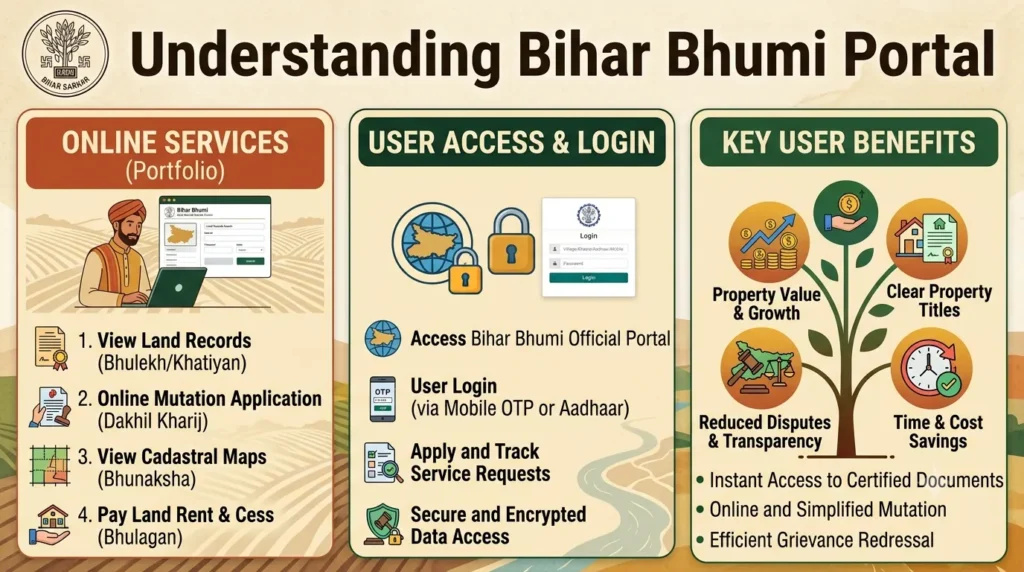
The Bihar Bhumi Portal, also known as the Bihar Land Records Portal, is a revolutionary digital initiative by the Government of Bihar that has transformed how citizens access land-related information. Launched as part of the Digital India mission, this comprehensive online platform provides transparent and instant access to land records, eliminating the need for multiple visits to government offices and reducing the scope for manipulation and fraud. Understanding how to navigate and utilize this portal is essential for landowners, prospective buyers, and anyone involved in property transactions in Bihar.
What is the Bihar Bhumi Portal?
The Bihar Bhumi Portal (biharbhumi.bihar.gov.in) is an integrated land record management system that digitizes and makes available various land-related documents and information. The portal is maintained by the Revenue and Land Reforms Department of Bihar and serves as a one-stop solution for accessing land records, mutation status, survey maps, and other crucial property-related information. This initiative aims to bring transparency, reduce corruption, and provide hassle-free services to citizens.
Key Features and Services
1. Land Records (Jamabandi/Registry)
The portal provides access to “Jamabandi” or Registry, which is the legal record of land ownership. This document contains essential details including the landowner’s name, plot number (Khata and Khasra numbers), area of land, type of land, and mutation details. Citizens can view and download these records without visiting the Tehsil or Circle Office.
2. Mutation Status (Dakhil Kharij)
Mutation is the process of updating land ownership records when property is transferred through sale, inheritance, gift, or partition. The portal allows users to check the status of mutation applications online, track pending cases, and understand the progress of their applications without physical inquiries.
3. Digital Survey Maps
The portal provides access to digitized cadastral maps showing plot boundaries, dimensions, and neighboring properties. These maps are crucial for identifying exact land locations, resolving boundary disputes, and verifying property details before transactions.
4. Land Tribunal Cases
Users can track cases filed in the Land Tribunal through the portal, checking case status, hearing dates, and orders passed. This transparency helps litigants stay updated without repeated court visits.
5. Property Registration Information
The portal links to the registration department, allowing users to access property registration details, verify registered documents, and obtain information about encumbrances or existing claims on properties.
How to Access Bihar Bhumi Portal
Accessing land records through the Bihar Bhumi Portal is straightforward and doesn’t require registration for basic searches:
Step 1: Visit the official website at biharbhumi.bihar.gov.in or lrc.bih.nic.in.
Step 2: Select your preferred language (Hindi or English).
Step 3: Choose the appropriate service from the homepage menu, such as “Apna Khata” for land records or “Dakhil Kharij” for mutation status.
Step 4: Enter the required details like district name, subdivision (Anchal), village (Mauza), and property identification numbers (Khata or Khasra number).
Step 5: Complete the captcha verification and click “Search” to view your land records.
Step 6: View the details online or download them for future reference. You can also take a printout, though it’s important to note that online copies are for reference only and not legally valid for official purposes.
Understanding Land Record Terminology
To effectively use the Bhulekh Bihar Portal, familiarity with key terms is essential:
- Khata Number: A unique identification number assigned to a landowner for their holdings in a village.
- Khasra Number: The plot or survey number identifying a specific piece of land.
- Jamabandi: The register containing ownership details and land characteristics.
- Dakhil Kharij: The mutation process for updating ownership records.
- Anchal: An administrative subdivision within a district.
- Mauza: A village or revenue estate unit.
Benefits of the Bihar Bhumi Portal
Transparency and Accessibility:
The portal has democratized access to land records, allowing anyone to verify ownership details from anywhere with internet connectivity. This transparency significantly reduces the risk of fraud and illegal land transactions.
Time and Cost Savings:
Previously, obtaining land records required multiple visits to government offices, involving time, travel costs, and often unofficial payments. The digital portal eliminates these hassles, providing instant access free of charge.
Reduced Corruption:
By making records publicly accessible and removing intermediaries, the portal has substantially reduced opportunities for manipulation and corruption in land record maintenance.
Better Due Diligence:
Prospective property buyers can conduct thorough due diligence by checking ownership history, pending mutations, and legal disputes before investing in property, reducing the risk of fraudulent transactions.
Efficient Administration:
For government officials, the digitized system streamlines record-keeping, reduces paperwork, and enables better land administration and revenue collection.
Important Considerations
While the Bihar Bhumi Portal is highly useful, users should remember that online land records are for informational purposes only. For legal proceedings or official transactions, certified copies obtained from the Circle Office or Tehsil are required. Additionally, always cross-verify information with physical documents and conduct thorough due diligence before property transactions.
The portal is regularly updated, but there may be occasional delays in reflecting recent mutations or changes. It’s advisable to verify the date of the last update when accessing records. In case of discrepancies or issues, citizens should contact the concerned Tehsil or Circle Office for resolution.
Future Enhancements
The Bihar government continues to improve the portal with additional features, better integration with other departments, and enhanced user experience. Plans include linking Aadhaar with land records, implementing blockchain technology for tamper-proof records, and providing more services online, including mutation applications and grievance redressal.
Frequently Asked Questions (FAQs)
1. Is registration required to access land records on the Bihar Bhumi Portal?
No, registration is not required for basic services like viewing land records (Jamabandi) or checking mutation status. You can access these services by simply entering the required property details like district, anchal, and plot numbers on the portal.
2. Are land records downloaded from the portal legally valid?
Records downloaded from the portal are for reference and informational purposes only. They are not legally valid for court proceedings or official transactions. For legal purposes, you must obtain certified copies from the Circle Office or Tehsil by paying the prescribed fees.
3. How can I check if my property has any legal disputes or encumbrances?
The portal displays information about pending mutations and can link to land tribunal cases. However, for comprehensive due diligence, you should also check encumbrance certificates from the Sub-Registrar’s office, verify court records, and physically inspect the property.
4. What should I do if I find errors in my land records on the portal?
If you notice discrepancies or errors in the land records, you should immediately contact your local Circle Office or Tehsil with supporting documents. File a written application requesting correction, and the authorities will investigate and update the records if your claim is valid.
5. How long does the mutation (Dakhil Kharij) process take in Bihar?
According to official guidelines, mutation should be completed within 30 days of application. However, actual processing time may vary depending on the complexity of the case, verification requirements, and workload at the concerned office. You can track the status online through the portal’s Dakhil Kharij section.